
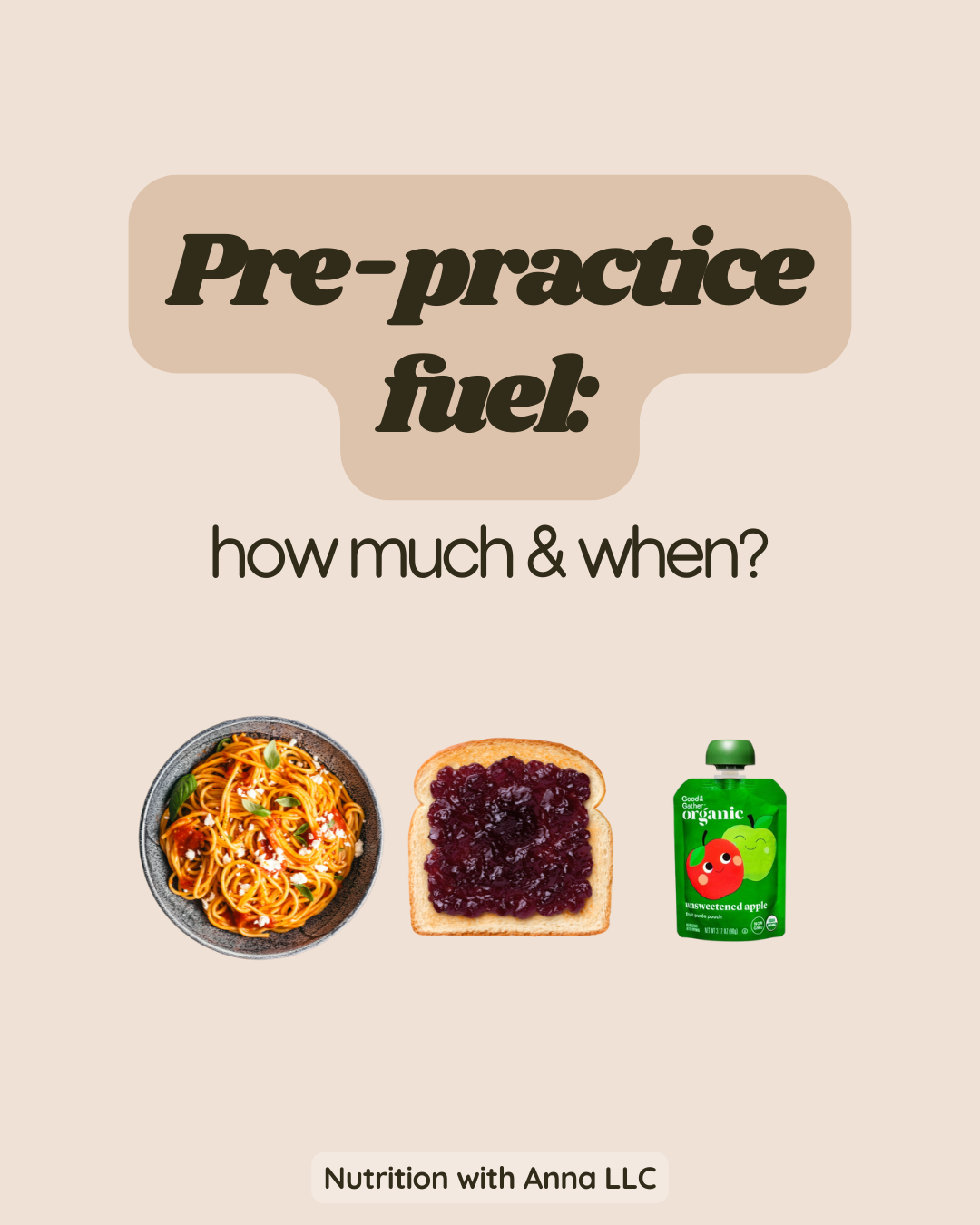
What Should Athletes Eat Before Practice? A Sports Dietitian’s Timing Guide
What athletes eat in the hours before practice can influence far more than whether your stomach feels comfortable. It can impact your energy, concentration, decision-making, training quality, and even how well you recover afterward.
The challenge? Knowing what to eat, how much, and when.
Why does pre-practice fueling matter?
Think of your body like a car - you wouldn’t expect it to perform well on an empty tank.
Showing up to practice underfueled can look like:
Low energy halfway through practice
Trouble focusing or making quick decisions
Legs feeling “heavy”
Hitting a wall late in training
Increased cravings after practice
Feeling wiped out for the rest of the evening
On the flip side, fueling appropriately before practice can support:
More consistent energy
Better concentration and reaction time
Higher-quality training sessions
Improved recovery afterward
More confidence going into practice or competition
Athletes don’t just need enough food—they need the right fuel at the right time.
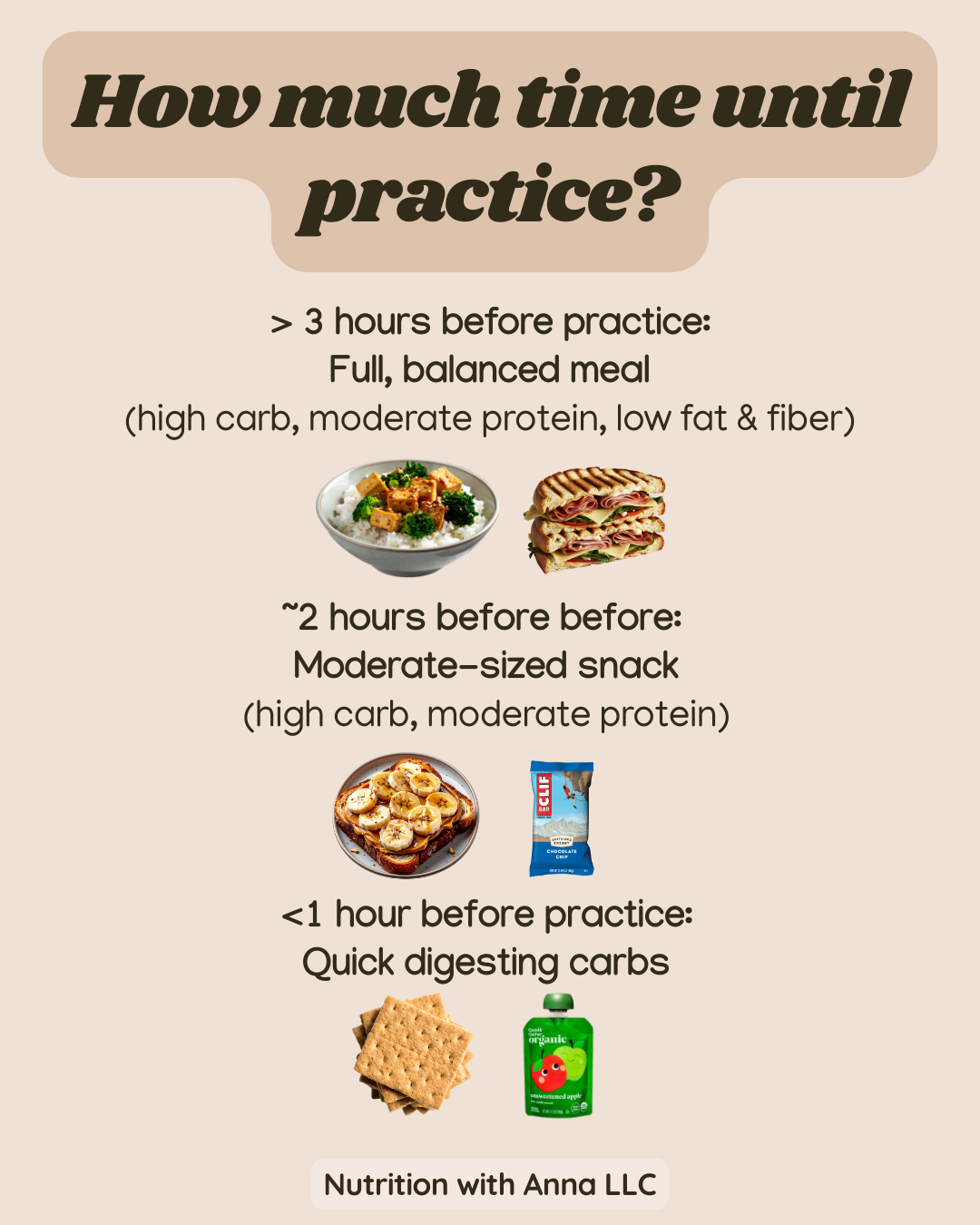
More than 3 hours before practice: Full meal
If you have 3+ hours before practice, this is a great opportunity for a full, balanced meal.
Focus on:
✅ Higher carbohydrate
✅ Moderate protein
✅ Lower fat and fiber (especially if your stomach is sensitive)
Carbohydrates are your body’s preferred fuel source for training, while protein supports muscle repair and recovery.
Examples:
Rice bowl with chicken or tofu + fruit
Pasta with lean protein + bread
Turkey sandwich + pretzels + applesauce
Bagel sandwich + yogurt + fruit
Burrito bowl with rice, beans, and lean protein
When you have several hours to digest, your body can comfortably handle a larger meal and use that fuel during practice.
About 2 hours before practice: Moderate-sized snack
If practice is about 2 hours away, try for a large snack.
Focus on:
✅ Higher carbohydrate
✅ Moderate protein
✅ Easy to digest
Examples:
Peanut butter banana toast
Greek yogurt + granola
Protein bar + fruit
Bagel + string cheese
Trail mix + dried fruit
Smoothie with fruit + yogurt
At this point, you’re topping off energy stores without feeling overly full.
A common mistake here? Eating too little because you’re “not that hungry,” then starting practice underfueled.
Less than 60 minutes before practice: Quick-digesting carbs
This is when simple, quick-digesting carbohydrates shine.
Focus on:
✅ Easy-to-digest carbs
✅ Lower fat
✅ Lower fiber
✅ Minimal protein
Examples:
Applesauce pouch
Banana
Graham crackers
Pretzels
Fig bars
Dry cereal
Sports drink
Toast with jam
These foods provide quick energy without sitting heavily in your stomach.
Remember: at this point, the goal is to show up fueled and feeling good.
Common pre-practice fueling mistakes I see
1. “I’m trying to eat CLEAN.”
Healthy is great, but sometimes athletes accidentally build meals that are too light in carbs.
For example: a salad with grilled chicken may check the “healthy” box… but it may not provide enough fuel for a two-hour soccer practice.
2. Waiting until practice starts to realize you’re hungry
If you’re hungry during warm-ups, you probably needed fuel earlier.
Hunger often shows up after energy levels have already started dropping.
3. Choosing foods that digest too slowly
High-fat fast food, protein shakes, or fiber-heavy meals right before practice can leave athletes feeling sluggish, bloated, or uncomfortable. Timing matters.
4. Skipping fuel because “I’m not hungry”
Busy school schedules, nerves, and stress can suppress appetite.
Not feeling hungry doesn’t always mean your body doesn’t need fuel.
Special situations
Early morning practice
If you’re training first thing in the morning, a full meal usually isn’t realistic.
Even something small can help:
Banana
Applesauce pouch
Toast with jam
Sports drink
Something is usually better than nothing. Start small, and work on increasing what you get in before morning practices over time.
After-school athletes
If lunch was at 11:30 and practice starts at 5:00, lunch alone won’t carry you through.
A planned pre-practice snack is essential.
Athletes with nervous stomachs
Competition nerves can make eating difficult.
Start with smaller, familiar foods that digest easily, and practice your routine during training (not on game day).
Final thought
The best fueling plan is one that fits:
Your sport
Your schedule
Your body size
Your training load
Your stomach
But one thing is universal: Athletes perform better when they show up fueled.